
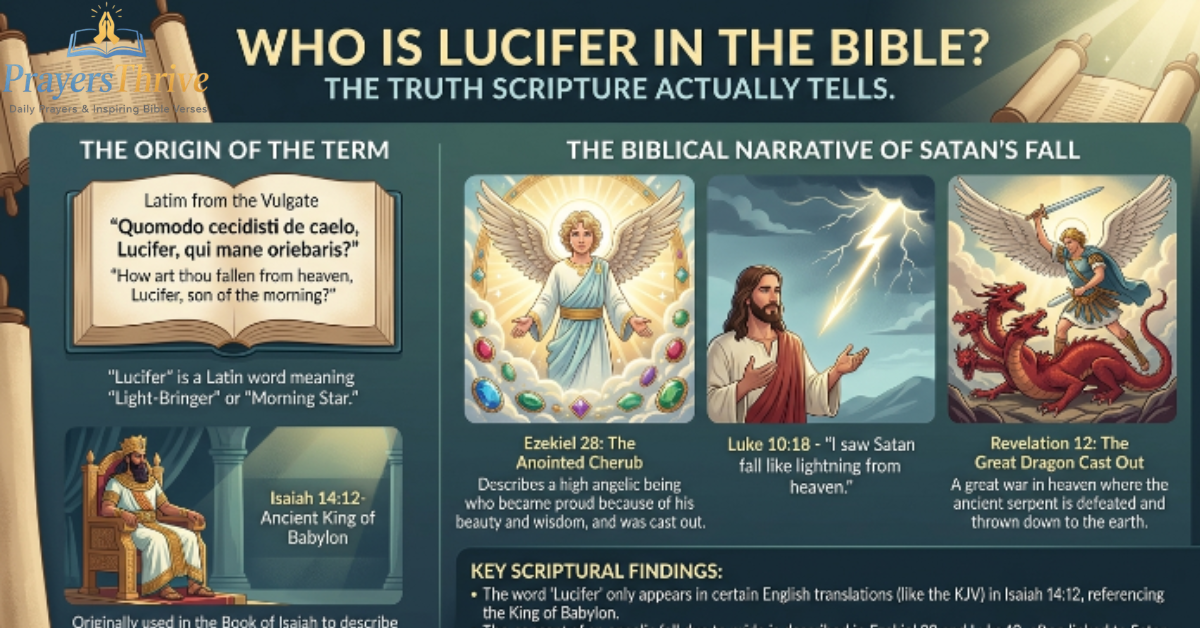
Few figures in scripture have been reshaped by culture as dramatically as the one most people call Lucifer. Ask almost anyone to describe him and you will hear about red skin, horns, a pitchfork and a throne in the underworld, yet none of that imagery comes from the Bible itself. It comes from centuries of paintings, poetry and film that slowly replaced the original text with something far more theatrical.
This guide sets aside the costume entirely and returns to what scripture actually says, tracing the name back to its Hebrew root, examining the passages in Isaiah and Ezekiel that describe him before his fall, untangling how he became linked with Satan in popular belief, and walking through the long artistic history that built the version of him most people picture today. By the end, you will understand not just who this figure was according to the biblical text, but why his story has functioned as one of scripture’s most enduring warnings about pride.
see also: 150+ Powerful Good Morning Prayers for Her to Start Her Day Right
The Single Verse Where the Name “Lucifer” Actually Appears in Scripture
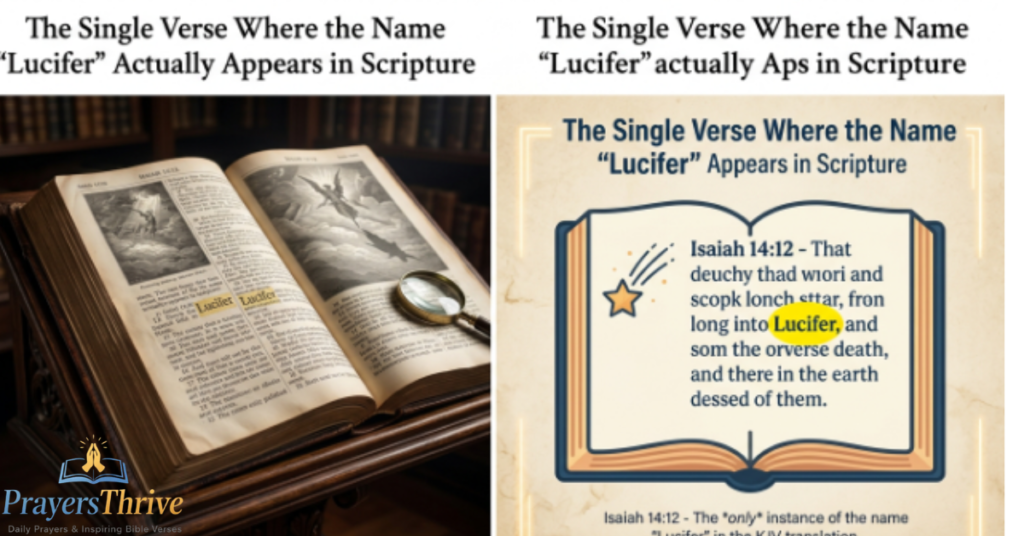
The word Lucifer shows up exactly once across the entire Bible, tucked inside a prophecy directed at a Babylonian king in the book of Isaiah. That single appearance carries an enormous amount of theological weight for how rarely the word is used. The verse describes a magnificent figure falling from the sky, stripped of the brightness that once defined him, and it is this brief, poetic image that eventually grew into an entire mythology in Western religious imagination.
It helps to understand upfront that the prophecy in Isaiah 14 was written as a taunt against a proud, oppressive ruler, using cosmic imagery to describe his downfall. Many theologians read this passage on two levels at once, as both a literal statement about a human king and a symbolic window into a much older, heavenly rebellion. Holding both readings together, rather than choosing one and discarding the other, is essential to understanding what the passage is actually communicating.
Tracing Helel Ben Shachar Back to Its Original Hebrew Meaning
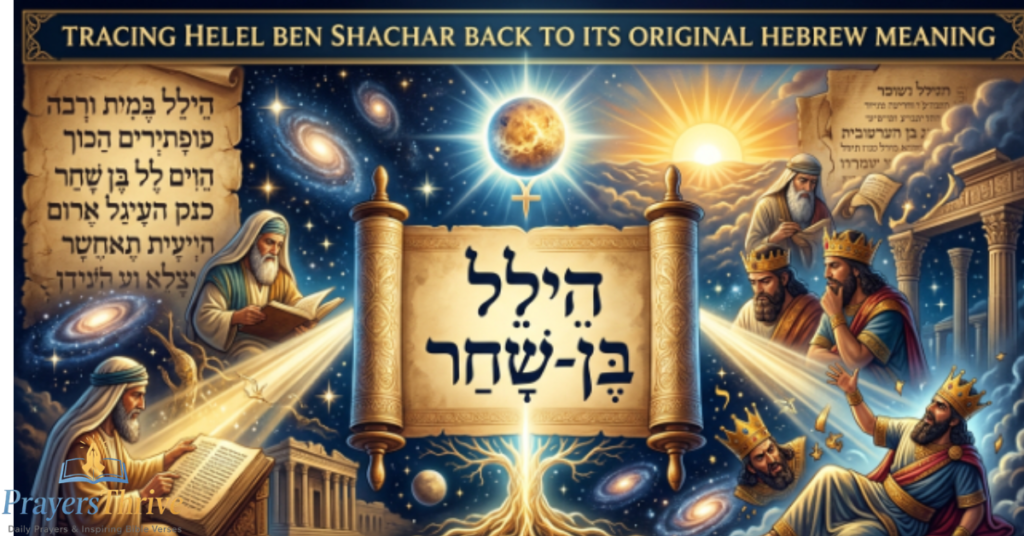
Before any translation touched this passage, the original Hebrew text used the term Helel ben Shachar, which scholars generally render as “shining one, son of the dawn.” The word Helel comes from a root associated with radiance or brilliance, and the phrase as a whole evokes the image of Venus, the brightest point of light visible just before sunrise, which vanishes the instant the sun itself appears.
This astronomical picture was deliberate poetry rather than a physical description of a creature. A being who briefly outshines everything around him, only to be swallowed by a greater light, became the perfect metaphor for pride that reaches for a position it was never meant to hold. Understanding this Hebrew foundation matters because nearly every later controversy surrounding this figure traces back to how translators chose to render this one phrase.
How a Fourth-Century Latin Translation Turned a Title Into a Proper Name
Why Jerome Chose “Lucifer” for This Passage
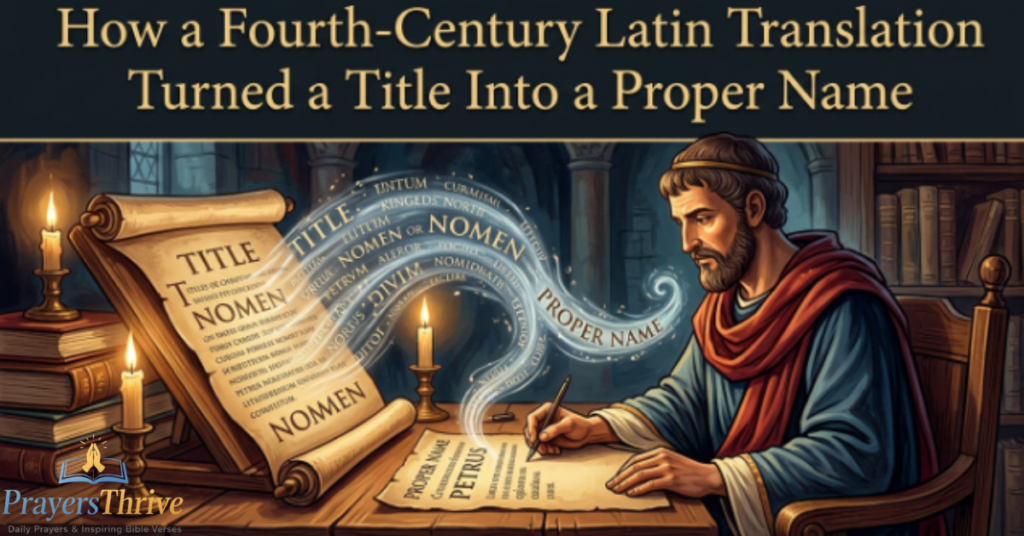
Centuries after Isaiah was written, the scholar Jerome undertook a massive project translating Hebrew and Greek scripture into Latin, producing what became known as the Vulgate. When he reached this particular verse, he translated the Hebrew phrase as “lucifer,” a Latin word simply meaning light-bringer or morning star. Jerome was not inventing a name for a mythological being. He was choosing the most accurate Latin equivalent available to him for a descriptive Hebrew phrase.
Over time, however, readers stopped treating the word as a description and began treating it as a proper name, a shift Jerome himself almost certainly never intended. This is one of the clearest examples in biblical history of a translation choice quietly reshaping theology for generations that followed.
The Overlooked Verse Where Jerome Used the Same Word for Christ
What rarely gets mentioned in popular discussions is that Jerome used this exact same Latin word elsewhere in his translation to refer to Jesus Christ, in a passage describing him as the morning star rising in believers’ hearts. The same title later reappears in the book of Revelation, where Christ directly identifies himself using the same imagery. This overlap is not a contradiction; it simply reflects that “morning star” was a title tied to brilliance and position, applied in one place to a being who fell and in another to the one who did not.
Why the King James Bible Cemented Lucifer as a Household Name
How Later Translations Quietly Corrected the Record
When translators produced the King James Bible in the early seventeenth century, they retained Jerome’s Latin word directly in the English text rather than translating the underlying Hebrew phrase afresh. That single editorial decision is largely responsible for turning a descriptive title into what English readers now treat as a personal name, and its influence on centuries of sermons, hymns and popular belief is difficult to overstate.
Most modern translations have since moved away from this approach, rendering the same Hebrew phrase as “morning star,” “day star” or “shining one” instead. These updated translations reflect a return to the original poetic imagery rather than a name, though the older rendering had already shaped Western religious culture so deeply that the correction has struggled to fully take hold in popular imagination.
What Ezekiel’s Portrait of a Covering Cherub Reveals About His Original Glory
The Specific Attributes Scripture Assigns Him Before the Fall
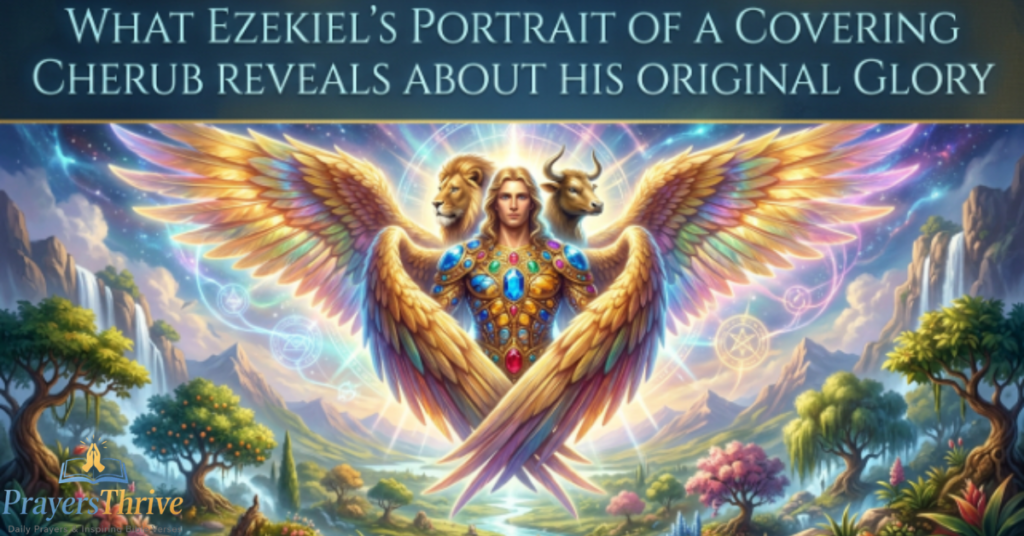
A separate and even more detailed passage appears in the book of Ezekiel, addressed on the surface to the king of Tyre but widely read by theologians as reaching beyond any earthly ruler into a description of a heavenly being before his corruption. This passage describes a figure of flawless beauty, extraordinary wisdom and a position of remarkable privilege, dwelling in a garden of splendor and adorned with precious stones.
The text describes him walking among what scripture calls stones of fire, occupying a role identified as an anointed covering cherub, a position of guardianship and closeness to the divine presence rather than distance from it. Far from a monstrous origin, this passage paints a picture of a being whose downfall becomes tragic precisely because of how much he had originally been given.
Reading the Morning Star Prophecy of Isaiah 14 in Its Full Context
Separating the Political Taunt Against Babylon From the Cosmic Reading
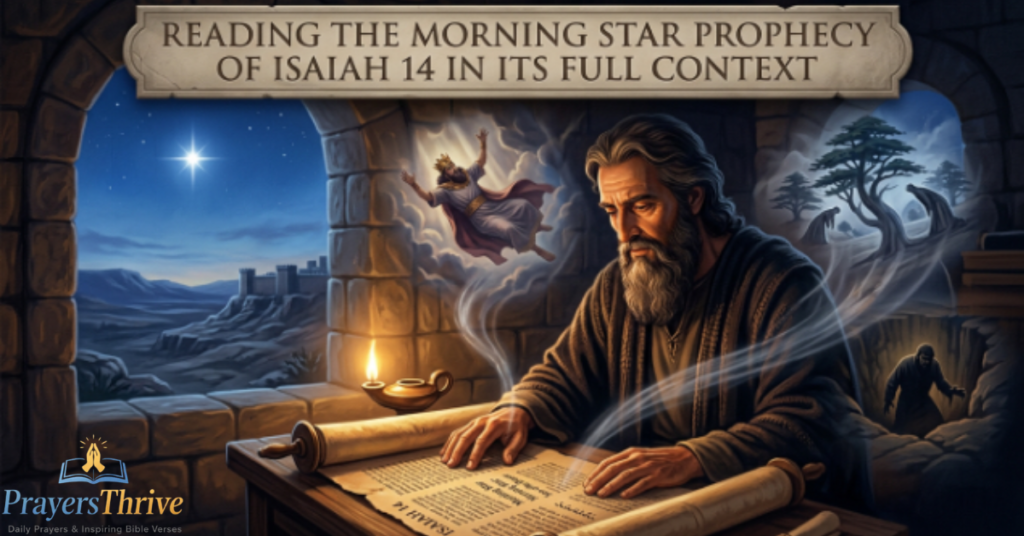
Isaiah 14 opens as a direct address to the king of Babylon, mocking his fall from absolute power using vivid, exaggerated imagery common to ancient prophetic poetry. Some biblical scholars, including several voices from the Protestant Reformation, argued strongly that the passage should be read primarily as political satire rather than a literal account of an angelic rebellion.
Other theologians maintain that the language used, particularly the description of ascending above the stars and attempting to sit above God himself, stretches far beyond anything a human king could plausibly claim, suggesting the prophet intentionally layered a spiritual meaning underneath the political one. Both readings have deep roots in Christian scholarship, and recognizing that this debate exists is part of engaging with the passage honestly rather than flattening it into a single simple story.
Does Scripture Describe Any Physical Form for Him After the Fall
The Handful of Images the Bible Actually Uses to Describe Him
After the fall described in Isaiah, scripture never returns to describe a fixed physical body for this figure. Instead, later biblical writers reach for a range of symbolic images to capture his post-fall nature, describing him at various points as a roaring predator seeking victims, a deceptive being capable of appearing as a messenger of light, an ancient serpent associated with cunning, and a destructive force operating largely unseen.
None of these images describe a consistent physical appearance in the way modern audiences tend to imagine. Taken together, they suggest a spiritual influence rather than a creature bound to a single form, which arguably makes the biblical picture more unsettling than any painted monster, since it cannot simply be recognized on sight.
What the Bible Never Actually Says About His Appearance or Domain
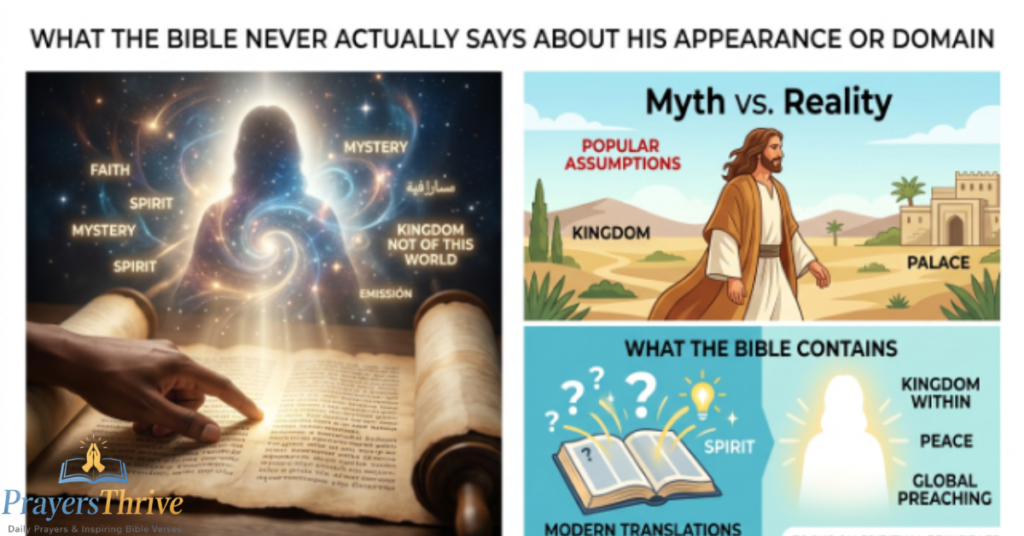
It is worth pausing to name directly what scripture does not claim about this figure, since so much of popular belief rests on details that never appear in the biblical text at all. Nowhere does scripture describe him with red skin or horns. Nowhere is he named ruler or king of hell; instead, later New Testament passages describe hell as a place of judgment prepared for him rather than a throne he currently occupies. Nowhere is he presented as an equal or opposite force standing against God on level footing.
This silence is not an accident or an oversight. It is, in its own way, a correction to centuries of imagery that scripture itself never authorized, and recognizing what the text withholds is just as important as recognizing what it states plainly.
Five Declarations of Self-Exaltation Recorded in Isaiah’s Prophecy
At the center of Isaiah’s prophecy sits a short sequence of statements, each beginning with a declaration of personal ambition, describing a desire to rise above his appointed position, to claim authority over other heavenly beings, to receive worship reserved for God alone, to surpass the glory of the heavens themselves, and ultimately to become equal to the Most High. Read together, these statements form an escalating pattern rather than a single outburst, moving step by step from ambition toward outright rebellion.
Biblical commentators have long treated this passage as scripture’s clearest anatomy of how pride actually develops, rarely announcing itself all at once but instead building gradually until a created being convinces itself that it deserves a position it was never given. The severity of the fall that follows these declarations underscores how seriously this pattern is treated within the text.
How One Being’s Rebellion Reportedly Swept a Third of Heaven’s Angels With It
The book of Revelation includes an image of a great dragon whose tail sweeps a third of the stars of heaven down to earth, a passage widely interpreted by theologians as describing a portion of angelic beings drawn into this rebellion alongside him. If that reading is correct, the consequences of his pride extended far beyond himself, pulling a significant portion of heaven’s inhabitants into the same fate through their own choice to follow him.
This detail also helps explain later New Testament language describing an entire structured hierarchy of spiritual opposition, rather than a single isolated adversary, suggesting that the fallout from this rebellion shaped an ongoing spiritual conflict rather than a single completed event confined to the ancient past.
Untangling Whether Lucifer and Satan Are Actually the Same Figure
Where Scripture Draws a Clear Line Between the Two Identities
Popular usage treats Lucifer and Satan as interchangeable names for the same being, yet the Bible itself never explicitly makes that equation in a single verse. The Isaiah passage describes a glorious figure before a described fall, while separate passages in Job and elsewhere introduce an adversarial figure functioning as an accuser standing in God’s presence, later expanded through New Testament passages describing a tempter and deceiver. Many readers throughout history have connected these figures as describing one continuous identity across different stages, though the direct textual link is more interpretive than explicit.
How Centuries of Sermons and Literature Quietly Merged Two Separate Figures
The merging of these identities into a single, unified character developed gradually across centuries of preaching, commentary and popular storytelling rather than through any single decisive biblical statement. Each generation of teachers and writers built on the assumptions of the one before it, and by the medieval period the two names functioned as complete synonyms in ordinary religious speech, regardless of how directly scripture itself supported that equation.
What the Reformers Questioned When They Returned to the Original Text
During the Protestant Reformation, several influential voices pushed back against centuries of inherited assumptions, returning directly to the Hebrew and Greek text rather than relying on accumulated tradition. Their conclusions varied, and not all reformers agreed with one another, but their willingness to reopen questions that had been treated as settled for generations reshaped how later scholars approached this entire topic.
Why Getting This Distinction Right Still Matters for Bible Readers Today
Understanding where scripture speaks plainly and where later tradition filled in the gaps is not simply an academic exercise. It shapes how modern readers approach the rest of the Bible, encouraging a habit of checking inherited assumptions against the original text rather than accepting popular belief as automatically equivalent to scripture itself.
From Radiant Figures of Light to Grotesque Gargoyles: How Medieval Art Rewrote the Story
The Early Church’s Luminous, Almost Angelic Depictions
The earliest surviving Christian artwork depicting this figure looked strikingly different from later imagery, often portraying him as a pale or bluish luminous being still carrying visible traces of angelic origin. These early artists appear to have stayed closer to the biblical emphasis on beauty and light, portraying a tragic figure rather than an outright monster.
How the High Middle Ages Turned Him Into a Monster
As centuries passed, church leaders and artists increasingly favored grotesque, frightening imagery designed to make evil visually repulsive rather than theologically accurate. By the height of the medieval period, elaborate literary works had cemented an image of a monstrous, horned creature trapped at the center of the underworld, an image with striking emotional power but very little grounding in the biblical text itself.
Milton, Dante and the Literary Inventions That Became “Common Knowledge”
The most influential shifts in popular imagination came not from theology but from literature. Epic poetry written centuries after the biblical text introduced a complex, articulate and even sympathetic rebel figure, giving him personality, motive and dramatic speeches nowhere found in scripture. Readers absorbed these literary portrayals so thoroughly that many eventually mistook poetic invention for biblical fact, a confusion that persists in casual religious conversation to this day.
How the Modern Red-Skinned Devil With Horns Became a Cultural Default
By the nineteenth century, theatrical productions and popular illustration had settled on the red-skinned, horned, pitchfork-carrying image that dominates costumes and cartoons even now. Much of this visual vocabulary was borrowed from older pagan imagery associated with wilderness deities rather than anything drawn from Hebrew or Christian scripture. Later film and television only cemented this look further, ensuring that generations grew up with a mental picture built almost entirely from art rather than text.
Placing Scripture Side by Side With Centuries of Artistic Imagination
When the biblical description is placed directly beside the cultural image most people carry, the contrast is striking at nearly every point. Scripture describes radiant beauty; popular imagery describes menace. Scripture never mentions horns; popular imagery treats them as essential. Scripture describes a being destined for judgment rather than reigning over a domain; popular imagery imagines a throne room in the underworld. Recognizing this gap is not about denying the reality of spiritual evil, but about locating the warning where scripture actually places it, in deception rather than obvious monstrosity.
The Deeper Theological Warning Hidden Inside a Perfect Being’s Fall
Why Free Will Made This Fall Possible in the First Place
A being created with genuine beauty, wisdom and privilege still chose rebellion, which raises one of theology’s oldest and most difficult questions. The most common answer offered across Christian tradition centers on free will, the idea that authentic love and worship require the real possibility of choosing otherwise. That same freedom that makes devotion meaningful also makes rebellion possible, even for a being who had every apparent reason not to choose it.
How Pride Specifically Targets Those Who Have Given the Most
Ezekiel’s account is explicit that his heart became proud specifically because of his own beauty, suggesting that pride tends to take root not in deprivation but in abundance. The more a being or a person is given, the louder the temptation grows to treat those gifts as personal achievements rather than gifts received, a pattern theologians consistently point to as the central lesson of this entire narrative.
What His Fall Set in Motion Beyond Himself
The consequences of this rebellion did not remain contained to a single being. Scripture describes an ongoing spiritual conflict extending outward from this original fall, shaping later New Testament language about unseen spiritual opposition and framing much of the broader biblical narrative that follows, right through to the final chapters of Revelation.
What This Ancient Story Still Teaches Believers About Humility Today
Beyond its historical and theological complexity, this narrative functions across scripture as a permanent caution against self-exaltation, repeated in wisdom literature that warns pride precedes destruction and a proud spirit precedes a fall. For believers today, the relevance has little to do with imagining horns or flames and everything to do with recognizing how easily gifts, position or success can quietly shift into self-reliance rather than gratitude.
Conclusion
The figure most people picture when they hear the name Lucifer bears little resemblance to what scripture actually describes. Stripped of centuries of art, poetry and popular retelling, the biblical text presents a being of extraordinary original beauty whose downfall came through pride rather than any inherent monstrosity. Understanding the Hebrew roots, the translation history and the specific passages in Isaiah and Ezekiel restores a story that is arguably more unsettling than any painted devil, precisely because it centers on deception rather than obvious evil.
Separating this figure from Satan where scripture itself remains ambiguous, and tracing how medieval art and later literature reshaped popular imagination, offers a clearer path back to the original text. What remains, ultimately, is less a horror story and more a warning, aimed less at fearing a mythical creature and more at recognizing how pride can quietly take root in anyone who forgets where their gifts truly came from.
see also: Death Anniversary Prayer Quotes for Peace and Hope
FAQs
Where does the name Lucifer actually appear in the Bible?
It appears only once, in Isaiah 14:12, within a prophecy describing a fallen figure once compared to the morning star.
Is Lucifer described as having horns or red skin anywhere in scripture?
No, that imagery comes entirely from later art and literature rather than from the biblical text itself.
Are Lucifer and Satan definitely the same being according to the Bible?
Scripture never states this directly; the connection developed gradually through centuries of tradition rather than one explicit verse.
Why did the King James Bible use the word Lucifer instead of translating it?
Its translators retained Jerome’s earlier Latin rendering rather than translating the original Hebrew phrase afresh, which shaped centuries of English tradition.
What does Ezekiel’s description reveal about this figure before his fall?
It describes remarkable beauty, wisdom and a position of privilege near the divine presence, rather than any monstrous origin.
What is considered the central lesson of this biblical story?
Most theologians point to pride, particularly how it can take root in beings or people who have been given great gifts or position.

I’m Aria, an AI content writing expert with 3 years of experience, creating engaging and inspiring faith-based content for readers seeking prayers, blessings, and Bible insights.