
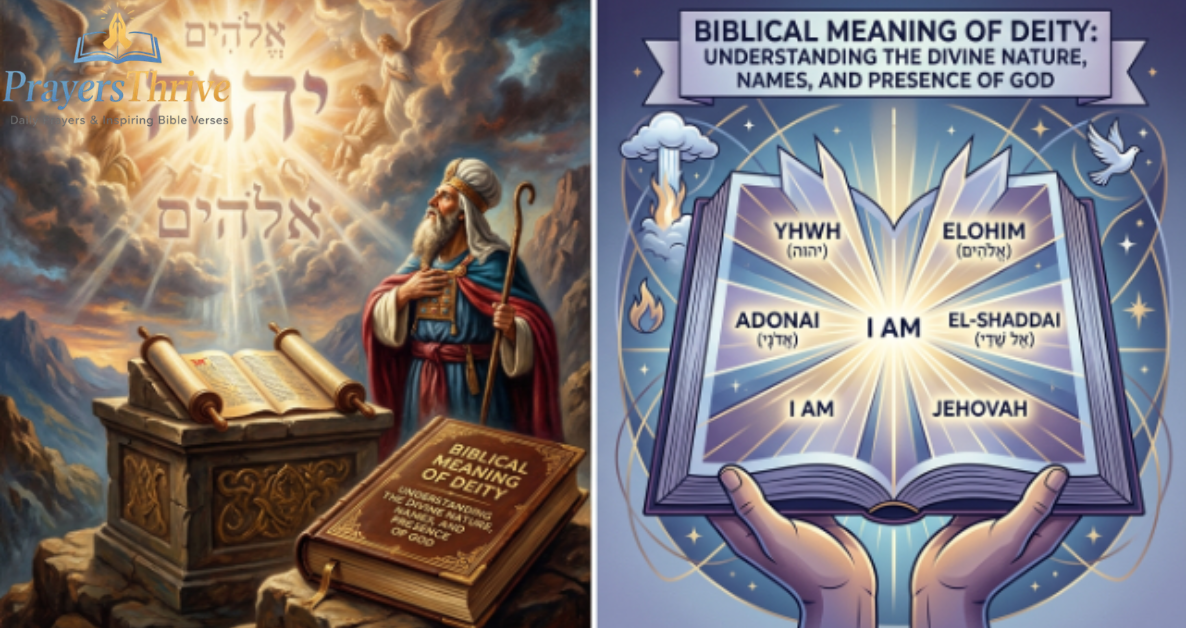
Have you ever paused while reading Scripture and wondered — what exactly does the word deity mean?
It is not just a theological term reserved for scholars and seminaries.
Deity is the very foundation of who God is — His eternal nature, His supreme authority, and His living presence woven throughout every page of the Bible.
Many believers understand that God is powerful. But the biblical concept of deity goes far beyond power alone.
It speaks to His holiness. His self-existence. His unchanging character. His divine essence that no created being can ever fully possess.
Whether you are exploring the deity of Christ, the names of God, or simply trying to deepen your understanding of the Lord, this guide will walk you through what Scripture teaches — clearly, honestly, and with spiritual depth.
Let us begin.
see also: 444 Meaning in the Bible: What God Is Really Telling You Through This Number
What Is the Biblical Meaning of Deity?
The word deity comes from the Latin deitas, meaning divine nature or godhood.
In biblical theology, deity refers to the essential qualities and attributes that make God uniquely God — eternal, self-sufficient, omnipotent, and wholly separate from creation.
It is not enough to say God is great. Deity means He is the source of all greatness.
The Apostle Paul captures this beautifully:
“For since the creation of the world God’s invisible qualities — His eternal power and divine nature — have been clearly seen, being understood from what has been made.” — Romans 1:20
The phrase divine nature in this verse is translated from the Greek word theiotes, which directly corresponds to the concept of deity.
God’s deity is not hidden. It is revealed — in creation, in Scripture, and most fully in the person of Jesus Christ.
The Divine Names of God: Revealing His Deity in Scripture
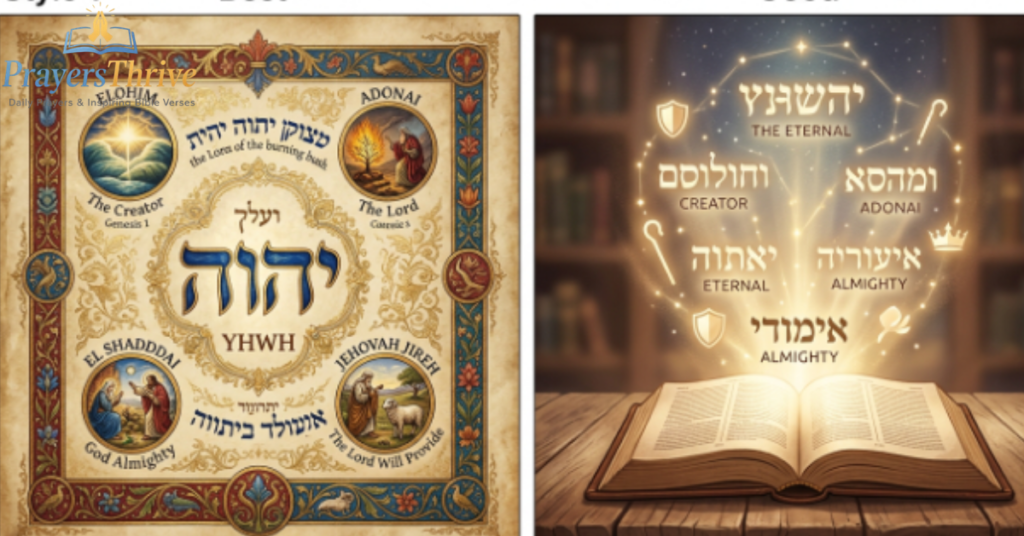
One of the most powerful ways the Bible reveals God’s divine nature is through His names.
Each name carries deep theological meaning. Each name uncovers a layer of who God truly is.
1. Yahweh — The Self-Existent God
The name Yahweh (often written LORD in English Bibles) comes from the Hebrew verb hayah, meaning “to be.”
When Moses asked God His name at the burning bush, the answer was stunning:
“God said to Moses, ‘I AM WHO I AM. This is what you are to say to the Israelites: I AM has sent me to you.'” — Exodus 3:14
This name declares something extraordinary — God does not derive His existence from anything else.
He simply IS.
Every other being in creation exists because something caused it to exist. God alone is the uncaused, self-existent, eternal Being.
That is deity in its purest form.
2. El Shaddai — God Almighty
The name El Shaddai means God Almighty or God All-Sufficient.
“When Abram was ninety-nine years old, the Lord appeared to him and said, ‘I am God Almighty; walk before Me faithfully and be blameless.'” — Genesis 17:1
This name reveals that God’s divine nature is all-powerful and completely sufficient for every human need.
No situation is too difficult for the Almighty. No prayer is too great for His sovereign authority.
3. El Elyon — The Most High God
El Elyon means the Most High God — the One who reigns supreme above all powers, kingdoms, and created things.
“I will praise the Lord Most High.” — Psalm 7:17
This name reinforces that deity belongs exclusively to God. Nothing in heaven or on earth shares His supreme position.
4. Adonai — Lord and Master
Adonai speaks of God’s absolute lordship and authority over all creation.
“Sovereign Lord, You have made the heavens and the earth by Your great power and outstretched arm. Nothing is too hard for You.” — Jeremiah 32:17
These divine names are not merely titles. They are windows into the eternal, unchanging nature of God — His very deity displayed in living language.
The Deity of God the Father
The Bible establishes God the Father as the eternal, sovereign Creator of all things.
His deity is not argued — it is declared.
“Before the mountains were born or You brought forth the whole world, from everlasting to everlasting You are God.” — Psalm 90:2
Notice the phrase from everlasting to everlasting — this is the language of true deity.
God the Father has no beginning and no end. He was not created. He was not appointed. He simply is — and always will be.
“I am the Lord, and there is no other; besides Me there is no God.” — Isaiah 45:5
This declaration is absolute. God’s deity is singular and exclusive. He shares His divine nature with no created being.
His attributes confirm His deity:
- Omniscience — He knows all things (Psalm 139:4)
- Omnipresence — He is present everywhere (Psalm 139:7–8)
- Omnipotence — He is all-powerful (Revelation 19:6)
- Holiness — He is entirely without sin (Isaiah 6:3)
- Eternality — He exists outside time (Isaiah 57:15)
The Deity of Jesus Christ: Fully God, Fully Man
Perhaps the most debated yet most clearly taught doctrine in the New Testament is the full and complete deity of Jesus Christ.
Jesus was not merely a great teacher. He was not simply a prophet sent from God.
He was — and is — God in human flesh.
“In the beginning was the Word, and the Word was with God, and the Word was God.” — John 1:1
This opening statement of John’s Gospel is one of the most theologically significant sentences in all of Scripture.
The Word — referring to Jesus — was not created. He was with God from the beginning. And He was God.
Paul makes the same declaration with even greater clarity:
“For in Him all the fullness of the Deity lives in bodily form.” — Colossians 2:9
The Greek word used here is theotes — meaning the totality of divine nature, the fullness of godhood.
Paul is not saying Jesus is somewhat divine or partially God.
He is saying that every single aspect of deity — every attribute, every perfection, every divine quality — dwells fully in Jesus Christ.
see also: What Does 88 Mean in the Bible? The Hidden Spiritual Message Most People Miss
Jesus Claimed Deity Himself
Throughout the Gospels, Jesus made statements that only make sense if He is fully divine.
“I and the Father are one.” — John 10:30
When Jesus made this claim, the Jewish religious leaders immediately picked up stones to kill Him — because they understood exactly what He was saying. He was claiming to be God.
“Before Abraham was, I AM.” — John 8:58
By saying I AM, Jesus was directly invoking the divine name God gave Moses in Exodus 3:14. This was not accidental language. It was a deliberate declaration of His eternal deity.
The Resurrection Confirms His Deity
The ultimate proof of Jesus’ divine nature is His resurrection from the dead.
“And who through the Spirit of holiness was appointed the Son of God in power by His resurrection from the dead: Jesus Christ our Lord.” — Romans 1:4
No ordinary human being conquers death. The resurrection was God’s declaration that Jesus is exactly who He claimed to be — the eternal Son of God, fully divine, fully worthy of worship.
The Holy Spirit and the Deity of the Trinity
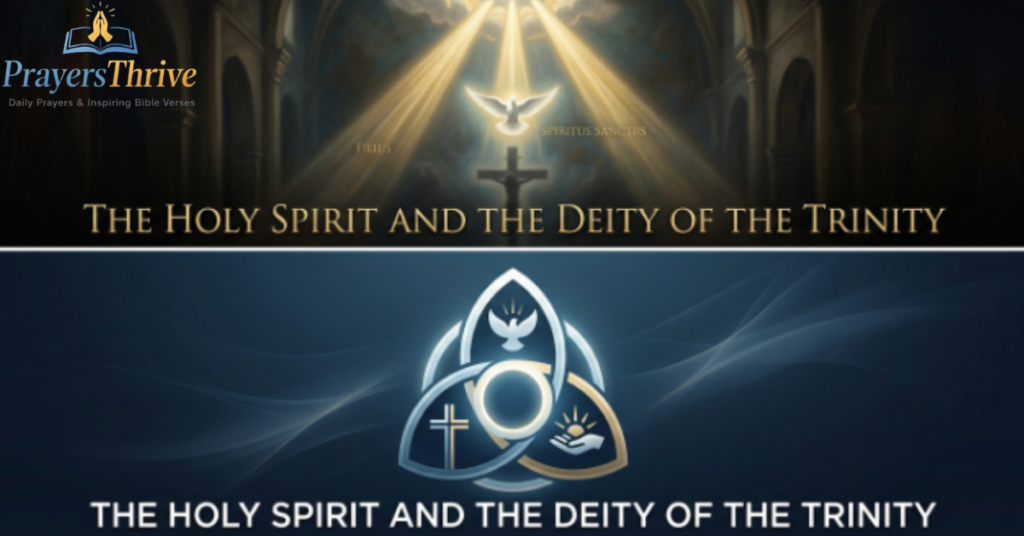
Biblical teaching on deity does not end with the Father and the Son.
The Holy Spirit is also fully God — the third Person of the Trinity who shares the same divine nature.
“Where can I go from Your Spirit? Where can I flee from Your presence?” — Psalm 139:7
This verse attributes omnipresence to the Spirit — a quality that belongs only to God.
The Apostle Peter confirmed this truth when he confronted Ananias:
“How is it that Satan has so filled your heart that you have lied to the Holy Spirit?… You have not lied just to human beings but to God.” — Acts 5:3–4
Lying to the Holy Spirit is the same as lying to God. The Spirit is not a force or an influence. He is the divine, personal presence of God working in the world today.
The Trinity: One God, Three Persons
The doctrine of the Trinity teaches that God is one in divine essence but exists in three distinct Persons — Father, Son, and Holy Spirit.
“Go therefore and make disciples of all nations, baptizing them in the name of the Father and of the Son and of the Holy Spirit.” — Matthew 28:19
Notice Jesus uses one name — not three names — yet He lists three Persons. This grammatical reality reflects the unity and diversity of the Triune God.
All three Persons share equally in the fullness of deity.
God’s Divine Presence: Deity That Draws Near
One of the most breathtaking truths about God’s deity is that it does not distance Him from humanity — it draws Him close.
This runs completely counter to how most people think about divinity.
Many ancient religions imagined their gods as remote, indifferent, or too exalted to care about ordinary people.
The God of the Bible is radically different.
“God is spirit, and those who worship Him must worship in spirit and truth.” — John 4:24
“The Lord is near to all who call on Him, to all who call on Him in truth.” — Psalm 145:18
The same God whose deity fills the heavens also dwells with the humble and broken in heart (Isaiah 57:15).
His nearness is not a contradiction of His deity — it is an expression of it.
God’s divine nature includes perfect love. And perfect love draws close.
How God’s Deity Is Revealed in Creation
Long before a single word of Scripture was written, God’s deity was being proclaimed.
Every sunrise. Every galaxy. Every grain of sand.
Creation itself is a declaration of divine nature.
“The heavens declare the glory of God; the skies proclaim the work of His hands.” — Psalm 19:1
Romans 1:20 confirms that God’s eternal power and divine nature have been clearly visible since the moment of creation — leaving humanity without excuse for ignoring Him.
The complexity of the human eye. The precise tilt of the earth’s axis. The mathematical constants that hold the universe together.
None of this happened by accident.
All of it points to a Creator whose deity is written into the very fabric of existence.
The Spiritual Significance of Understanding God’s Deity

Understanding God’s divine nature is not merely an intellectual exercise.
It transforms the way you live.
1. It Deepens Authentic Worship
When you truly grasp who God is — His holiness, His power, His eternal nature — worship becomes something entirely different.
It moves from routine religious activity to a genuine encounter with the living God.
“Holy, holy, holy is the Lord Almighty; the whole earth is full of His glory.” — Isaiah 6:3
Isaiah’s encounter with God’s holiness left him undone. That is the appropriate response to standing before true deity.
2. It Builds Unshakeable Faith
Many believers struggle with doubt and anxiety because their vision of God is too small.
When you understand that God is omnipotent, omniscient, and eternally faithful — your circumstances stop being bigger than your God.
“Trust in the Lord forever, for the Lord, the Lord Himself, is the Rock eternal.” — Isaiah 26:4
Faith built on the rock of God’s divine nature cannot be shaken.
3. It Gives Eternal Perspective
Knowing God’s deity reminds you that this present life is not all there is.
The eternal God has prepared an eternal future for those who belong to Him.
“For I consider that the sufferings of this present time are not worth comparing with the glory that is to be revealed to us.” — Romans 8:18
Deity is a lens. When you see life through it, everything changes.
4. It Humbles the Human Heart
Standing before the God who spoke creation into existence from nothing, who holds all of history in His hands — human pride has no ground to stand on.
Understanding deity produces humility.
And humility is the beginning of wisdom.
Deity and the Doctrine of Salvation
The deity of Jesus Christ is not just a theological belief to hold — it is the very foundation of human salvation.
If Jesus were merely human, His death on the cross would have atoned for only one human life.
But because Jesus is fully God, His sacrifice carries infinite worth — sufficient to cover the sin of every person who has ever lived or ever will live.
“For God so loved the world that He gave His one and only Son, that whoever believes in Him shall not perish but have eternal life.” — John 3:16
Salvation is only possible because of who Jesus is — the eternal, divine Son of God who took on human flesh, lived a sinless life, died in our place, and rose again in victory over death.
Deny the deity of Christ and the entire foundation of the Gospel collapses.
Embrace it — and you find the only door to eternal life.
Practical Ways to Respond to God’s Deity
Understanding God’s divine nature should produce real, visible change in a believer’s life.
Worship with depth — Let your knowledge of God’s deity fuel reverent, heartfelt worship rather than casual, surface-level religion.
Pray with confidence — You are not praying to an indifferent universe. You are speaking to the omnipotent, all-knowing, ever-present God who loves you.
Live with humility — Recognizing God’s supreme authority means releasing your grip on pride and self-sufficiency.
Trust in difficulty — When life is hard and answers are scarce, the eternal nature of God is your anchor. He sees what you cannot see. He knows what you do not know.
Share the truth — The God whose deity fills the universe has chosen to make Himself known. That is news worth sharing.
FAQs
1. What is the meaning of deity in the Bible?
In the Bible, deity refers to the divine nature and essential qualities that belong to God alone — His eternal existence, omnipotence, holiness, and absolute supremacy over all creation. The Greek words theiotes (Romans 1:20) and theotes (Colossians 2:9) both express this concept, pointing to the fullness of God’s divine nature as revealed in Scripture and most completely in Jesus Christ.
2. Does the Bible teach that Jesus is fully divine?
Yes, the Bible consistently and clearly teaches the full deity of Jesus Christ. John 1:1 declares that Jesus (the Word) was God from the beginning. Colossians 2:9 states that all the fullness of deity dwells in Him bodily. Jesus Himself claimed divine identity using God’s covenant name “I AM” (John 8:58), and His resurrection from the dead was God’s ultimate confirmation of His divine nature.
3. What is the difference between deity and divinity?
While both terms are closely related, deity typically refers to the essential nature of being God — the state or quality of godhood itself. Divinity is a broader term that can refer to God’s attributes, character, or things associated with God. In theological usage, deity is specifically used to affirm that someone or something possesses the full nature of God — which Scripture reserves exclusively for the Father, Son, and Holy Spirit.
4. Why is understanding God’s deity important for Christian faith?
Understanding God’s deity is essential because it is the foundation of everything Christianity claims. It grounds the authority of Scripture, the validity of Jesus’ atonement, the power of the Holy Spirit, and the certainty of God’s promises. A diminished view of God’s deity produces weak faith, shallow worship, and spiritual instability. A correct understanding of who God truly is — eternal, holy, all-powerful, and present — transforms a believer’s entire spiritual life.
Conclusion
The biblical meaning of deity is not just an answer to a theological question.
It is an invitation to know the God who is — the eternal, self-existent, all-powerful Creator who is also the loving Father, the redeeming Son, and the indwelling Spirit.
His divine nature is not cold doctrine. It is living truth that has the power to reshape your entire understanding of existence, purpose, and eternity.
When you grasp what it means that God is truly and fully divine — that Jesus Christ embodies the complete fullness of deity — worship deepens, faith strengthens, and life begins to make sense in ways it never did before.
The God whose deity fills the universe has not remained silent or distant. He has spoken. He has come near. He has made a way. And that changes everything.

I’m Aria, an AI content writing expert with 3 years of experience, creating engaging and inspiring faith-based content for readers seeking prayers, blessings, and Bible insights.