

Have you come across the name Tristan and wondered whether it carries any biblical weight?
Perhaps you are naming a child, searching for the tristan name meaning bible, or simply curious about what does tristan mean in the bible. This guide walks through the biblical meaning of tristan and the biblical interpretation of names connected to sorrow. It also explores the spiritual symbolism that makes this name resonate with Christian believers around the world.
Although Tristan is not a name recorded in Scripture, its emotional roots connect naturally to biblical themes of suffering.
These themes include faith and identity in bible, along with god’s purpose in trials.By the end of this article, you will understand exactly how the tristan name meaning bible fits into a larger story of hope. This guide traces the name’s history across Latin and Celtic roots and walks through the specific Bible verses that echo its emotional themes.
Whether you are researching this name for a child or simply out of curiosity, every section below offers a complete and spiritually grounded picture.
see also: 3AM Prayer Meaning: Why This Hour Holds Powerful Spiritual Significance
Understanding the Name Tristan in a Biblical Context
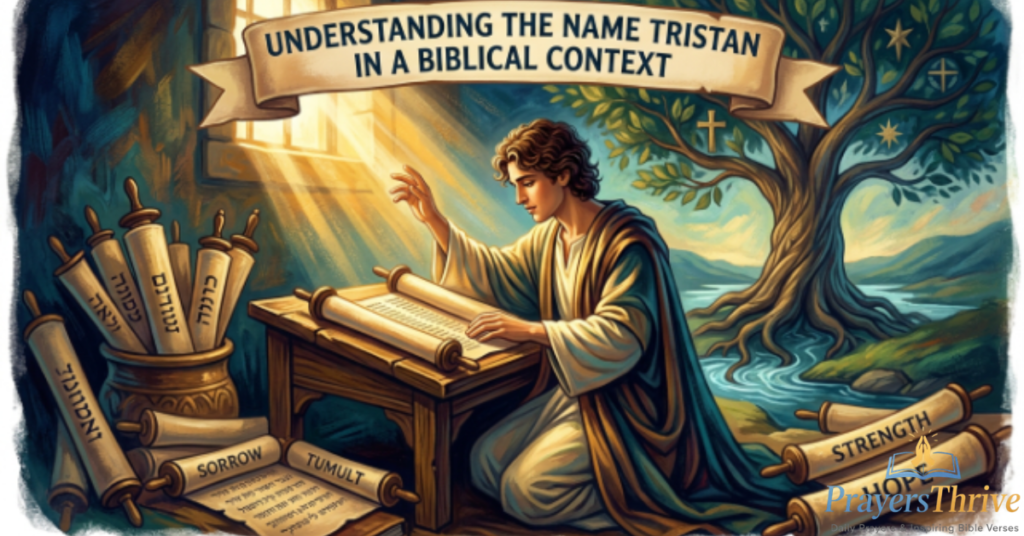
The tristan name meaning bible question comes up often among parents, believers, and anyone curious about names with emotional depth. While Tristan will not be found printed in Genesis, the Psalms, or the Gospels, its underlying themes speak the same language as Scripture itself.
Here is why the name still holds spiritual weight even without a direct biblical reference:
- Scripture frequently honors people whose stories began in sorrow.
- Names carrying themes of sadness often evolve into symbols of victory.
- God is described throughout the Bible as near to those who suffer.
- Emotional names invite deeper reflection on personal faith.
- The absence of a name in Scripture does not remove its spiritual value.
- Many Christian families choose names for meaning rather than direct mention.
- Tristan reflects a journey familiar to countless biblical figures.
- Sorrow-rooted names often carry the seeds of future strength.
- The name encourages honest conversation with God about pain.
- Spiritual meaning can be discovered outside of literal text.
Why People Search for a Biblical Meaning Behind Tristan

Many parents and believers turn to search engines wanting reassurance that a name they love still fits within a life of faith. Understanding this search intent helps explain why the topic matters so much to families today.
- New parents often want a name that carries both beauty and depth.
- Some believers feel drawn to a name before knowing its full history.
- Christian families frequently want reassurance before finalizing a name choice.
- Others encounter the name through dreams, conversations, or personal experience.
- Some are simply curious about how non-biblical names fit within faith traditions.
- People want to know if a sorrowful root can still carry a hopeful future.
- Many want language they can use when explaining the name to their child later.
- Some search out of pure curiosity about linguistic and spiritual history.
- Others are drawn to the name through the medieval legend and want a faith-based view.
- All of these searches lead back to the same reassuring answer: meaning matters more than mention.
Does Tristan Appear Anywhere in Scripture?

To answer plainly: no, Tristan is not a biblical name in the traditional sense. It does not appear in the Old Testament or the New Testament, and there is no character, tribe, or place carrying this title. Understanding where the name actually originated helps explain why it still feels so spiritually rich.
Latin Origins of the Name
The most widely accepted root of Tristan traces back to the Latin word “tristis,” meaning sorrowful or sad. This root shaped how the name was understood across early Christian Europe.
- Latin culture often embedded emotional meaning directly into names.
- Tristis reflects heaviness of heart rather than weakness of spirit.
- Early Christian scribes sometimes softened sorrowful names with hopeful commentary.
- The Latin root gave the name lasting emotional resonance.
- Sorrow in Latin naming tradition was rarely seen as purely negative.
- Roman naming customs often paired difficult meanings with noble qualities.
- The word tristis also appears in classical poetry describing longing.
- This origin remains the most commonly cited source in modern name dictionaries.
Celtic and Pictish Roots
A second origin comes from the Celtic name Drustan or Trystan, used among early Pictish and Scottish communities. This version leans toward meanings like tumult, noise, or boldness.
- Celtic naming traditions often reflected personality traits rather than emotions.
- Drustan suggests a warrior spirit rather than sorrow alone.
- Over centuries, the Latin and Celtic meanings blended together.
- This dual origin gives Tristan both emotional depth and inner strength.
- Historical linguists still debate which root came first.
- Pictish record-keeping was largely oral, making the exact origin difficult to trace.
- Some scholars believe the Celtic root influenced the later French spelling.
- The blending of two cultures gives the name a wider spiritual reach today.
The Medieval Legend of Tristan and Isolde
The name became widely known through the medieval romance of Tristan and Isolde, a tragic tale of forbidden love, loyalty, and sacrifice. This legend cemented sorrow as the dominant cultural association with the name.
- The legend is secular in origin, not a Christian text.
- Tristan is portrayed as noble, loyal, and deeply emotional.
- The story’s tragedy shaped centuries of naming perception.
- Christian reinterpretation later separated the name from its tragic legend.
- The romance remains a literary classic studied for its emotional themes.
- Composers and poets across Europe retold the story for generations.
- The tale influenced later works, including operas and modern novels.
- Despite its sorrow, the legend also highlights unwavering loyalty.
How the Name Was Reinterpreted Through Faith
Many modern parents choose Tristan not because of the legend, but because of how the name sounds and feels. Faith communities have taken the sorrowful root and reframed it as a picture of redemption.
- Reinterpretation allows names to grow beyond their origin story.
- Faith transforms heavy meanings into hopeful ones.
- Parents often research meaning before finalizing a name choice.
- Christian naming traditions regularly repurpose non-biblical names.
- Tristan today carries strength, depth, and quiet resilience.
- Pastors and mentors often encourage parents to pray meaning into a name.
- Reinterpretation does not erase history; it adds a new chapter to it.
- This shift mirrors how the gospel itself reframes suffering as purposeful.
Etymology and Origin Overview of Tristan
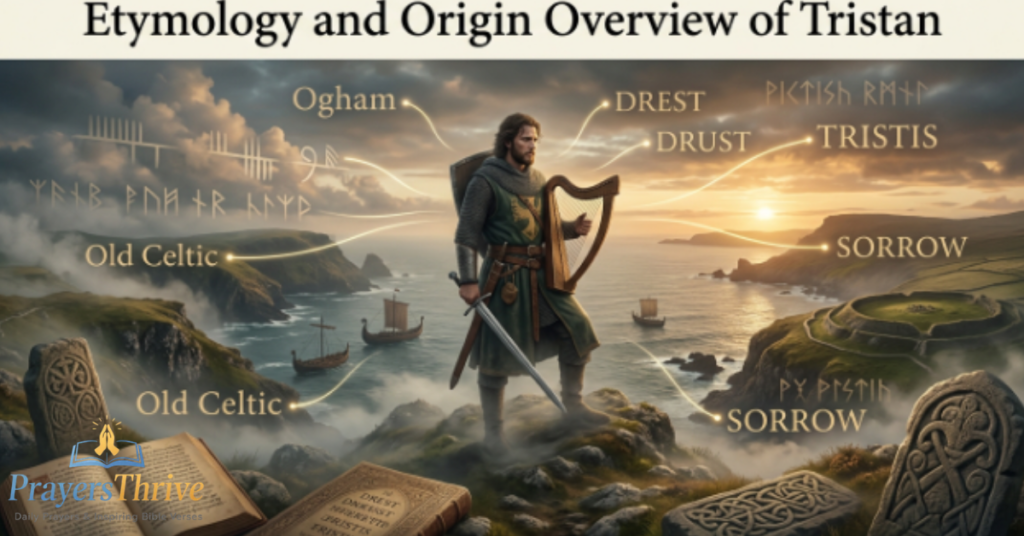
| Origin | Root Term | Core Meaning | Spiritual Interpretation |
| Latin | Tristis | Sorrowful, sad | A heart familiar with grief |
| Celtic/Pictish | Drustan, Trystan | Tumult, boldness | Inner strength and resolve |
| Medieval Legend | Tristan and Isolde | Tragic love | Loyalty through hardship |
| Christian Reframing | — | Sorrow to strength | Faith formed through trials |
The Cultural Journey of Tristan Through History

Beyond its linguistic roots, Tristan has traveled through many centuries of literature, art, and naming trends before arriving at its modern spiritual reputation.
Tristan in Medieval Literature
During the medieval period, Tristan appeared in poetry, chivalric romance, and courtly storytelling across France, Britain, and Germany.
- Medieval authors used Tristan to represent devotion under pressure.
- The character’s loyalty often outweighed his personal suffering.
- Chivalric literature commonly explored the tension between duty and emotion.
- Tristan’s story was retold with regional variations across Europe.
- These retellings kept the emotional core of the name alive for centuries.
Tristan in Modern Naming Trends
In more recent decades, Tristan has grown in popularity as parents seek names that feel timeless yet distinctive.
- The name is now common across English-speaking and European countries.
- Modern parents often value its strong, memorable sound.
- Pop culture references have introduced the name to new generations.
- Christian families increasingly choose it for its symbolic depth rather than legend.
- Its rising popularity reflects a broader trend toward meaningful, story-rich names.
Bible Verses Connected to the Meaning of Tristan

Since the name is closely tied to sorrow, struggle, and emotional depth, several Bible verses naturally align with its symbolic meaning. These verses do not define Tristan directly, but they illuminate the spiritual journey the name represents.
Psalm 34:18 – Nearness to the Brokenhearted
This verse reminds believers that God draws close during seasons of grief, offering comfort rather than distance.
- Sorrow is never a barrier to God’s presence.
- Brokenness often becomes the starting point for deeper faith.
- The verse reassures anyone carrying a heavy heart.
- God’s nearness is a promise, not a possibility.
- This truth mirrors the emotional core of the name Tristan.
Romans 5:3-4 – Suffering Produces Perseverance
Paul explains that suffering is not wasted; it builds character and produces lasting hope.
- Perseverance is developed, not inherited instantly.
- Character formed in hardship tends to last longer.
- Hope becomes stronger after being tested by pain.
- This progression reflects the sorrow-to-strength theme of Tristan.
- Suffering, viewed spiritually, becomes a teacher rather than an enemy.
James 1:2-4 – Trials Build Endurance
James encourages believers to view trials with joy because testing produces spiritual maturity.
- Endurance grows through repeated testing, not comfort.
- Joy in trials is a spiritual discipline, not a natural reaction.
- Maturity is often the byproduct of difficulty.
- This principle reflects the trials-to-trust symbolism of Tristan.
- Testing reveals the authenticity of one’s faith.
2 Corinthians 12:9 – Strength Revealed in Weakness
Paul records God’s promise that divine strength is made complete in human weakness.
- Weakness is not shameful within a biblical framework.
- God’s power often shows up most clearly during struggle.
- This verse comforts anyone who feels emotionally depleted.
- Tristan’s sorrowful root aligns with this theme of hidden strength.
- Grace becomes sufficient exactly where human ability runs out.
Psalm 30:5 – Joy Arrives After Sorrow
This verse promises that weeping is temporary while joy eventually returns.
- Nighttime weeping is described as passing, not permanent.
- Morning joy represents restoration after a hard season.
- This verse offers hope to anyone feeling emotionally exhausted.
- The rhythm of sorrow and joy appears throughout Scripture.
- Tristan’s meaning echoes this promise of eventual relief.
Romans 8:28 – Purpose Woven Through Pain
Paul reassures believers that God works all things, including painful ones, toward good.
- Purpose is not always visible in the moment of suffering.
- God’s work often happens quietly beneath the surface.
- This verse reframes pain as part of a larger plan.
- Tristan’s pain-to-purpose symbolism reflects this exact promise.
- Trusting this verse requires patience and long-term faith.
Isaiah 40:29-31 – Strength Renewed for the Weary
Isaiah describes how God gives fresh strength to those who feel tired and worn down.
- Weariness is acknowledged honestly within Scripture.
- Renewed strength is promised specifically to those who hope in God.
- This verse closes the emotional arc from sorrow to restoration.
- Tristan’s meaning ultimately points toward this kind of renewal.
- Waiting on God is presented as an active, strengthening practice.
Quick Verse Reference Guide for Tristan’s Meaning
| Theme | Verse | Core Promise |
| Comfort in Grief | Psalm 34:18 | God stays near the brokenhearted |
| Growth Through Suffering | Romans 5:3-4 | Suffering builds lasting character |
| Endurance in Testing | James 1:2-4 | Trials produce spiritual maturity |
| Power in Weakness | 2 Corinthians 12:9 | Grace is sufficient in struggle |
| Joy After Sorrow | Psalm 30:5 | Weeping gives way to morning joy |
| Purpose in Pain | Romans 8:28 | God works pain toward good |
| Renewal for the Weary | Isaiah 40:29-31 | Hope restores fading strength |
Additional Scriptures That Echo Tristan’s Emotional Journey

Beyond the core seven verses, a few additional passages deepen the spiritual picture connected to Tristan’s meaning.
Lamentations 3:22-23 – Mercy Renewed Each Morning
This passage reminds readers that God’s mercy does not run out, even after repeated seasons of grief.
- Mercy is described as new every single morning.
- Faithfulness is presented as a daily, dependable promise.
- This verse pairs naturally with the sorrow-to-joy theme of Tristan.
- Consistency in God’s character offers stability during hard seasons.
- Daily renewal encourages believers to keep moving forward.
Matthew 5:4 – Comfort for Those Who Mourn
Jesus teaches that those who mourn are blessed because comfort is promised to them.
- Mourning is treated as a valid, even honored, human experience.
- Comfort is presented as a guaranteed outcome, not a maybe.
- This teaching reframes grief as part of a blessed journey.
- Tristan’s sorrowful origin fits naturally within this teaching.
- Jesus consistently met grieving people with compassion, not judgment.
2 Corinthians 1:3-4 – Comfort That Overflows to Others
Paul describes how the comfort believers receive from God is meant to be shared with others in pain.
- Personal comfort is designed to become communal compassion.
- Suffering often prepares believers to help others facing similar pain.
- This verse strengthens the compassion theme connected to Tristan.
- Comfort received honestly tends to overflow naturally to others.
- This cycle reflects the heart of Christian community.
The Deeper Spiritual Symbolism Behind Tristan

Beyond etymology and verse references, Tristan carries a layered symbolic journey that many believers find personally meaningful. The five themes below summarize this transformation.
From Sorrow to Strength
Sorrow, when placed in a spiritual context, becomes fertile ground for growth rather than a permanent condition.
- Biblical figures like Joseph moved from betrayal to leadership.
- David transitioned from hiding to reigning as king.
- Naomi journeyed from bitterness back toward joy.
- Emotional pain often precedes meaningful transformation.
- Strength is rarely granted without first passing through difficulty.
From Trials to Trust
Every trial mentioned in Scripture ultimately points toward a deeper reliance on God rather than self.
- Trust is built gradually, not received all at once.
- Difficult seasons reveal what a person truly relies upon.
- Consistency during trials strengthens long-term faith.
- Tristan’s turbulent Celtic root mirrors this idea of resolve.
- Trust matures most visibly when circumstances feel uncertain.
From Pain to Purpose
Pain frequently becomes the training ground for a person’s future calling or ministry.
- Moses’ early hardships prepared him to lead a nation.
- Paul’s suffering equipped him to strengthen the early church.
- Ruth’s personal loss placed her within a significant lineage.
- Painful chapters often carry hidden long-term purpose.
- Compassion for others frequently grows out of personal struggle.
From Struggle to Restoration
The fourth movement in this symbolic journey is restoration, where God rebuilds what difficulty once broke down.
- Restoration is a recurring promise throughout the Old and New Testaments.
- Broken confidence can be rebuilt through patient faith.
- Emotional wounds are not permanent within a biblical worldview.
- Tristan’s meaning closes on this note of renewed hope.
- Faith consistently points toward healing rather than lasting defeat.
From Grief to Gratitude
A final and often overlooked theme is the shift from grief toward genuine gratitude once healing takes root.
- Gratitude often grows strongest after seasons of loss.
- Looking back on hardship can reveal unexpected blessings.
- Grief processed honestly tends to soften into thankfulness over time.
- This shift completes the emotional arc symbolized by Tristan.
- Gratitude becomes a quiet form of worship after difficult seasons.
Tristan Meaning in Hebrew Thought and Symbolism
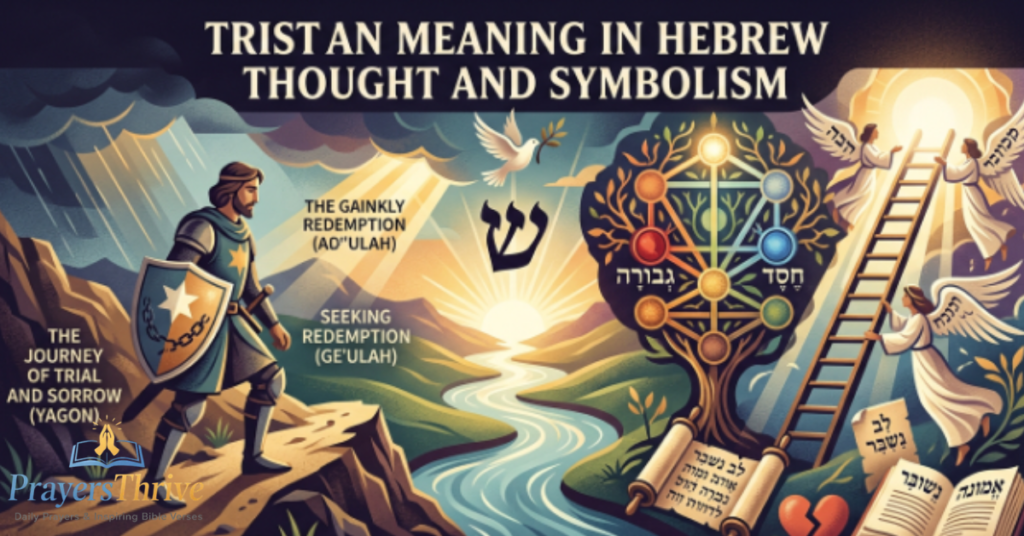
Tristan is not a Hebrew name by origin, yet viewing it through a Hebrew spiritual lens adds another layer of meaning. Hebrew tradition places high value on emotional honesty before God, which aligns closely with the heart behind this name.
Emotional Depth in Hebrew Spirituality
Hebrew spiritual thought does not treat sorrow as shameful; instead, it treats it as sacred material for prayer and worship.
- Job expressed raw grief while remaining faithful to God.
- David’s psalms are filled with honest emotional expression.
- Jesus himself wept openly at the tomb of Lazarus.
- Emotional transparency is respected rather than hidden in Scripture.
- Tristan’s sorrowful root fits naturally within this tradition.
Refinement Through Trials
Hebrew spirituality frequently describes trials as a refining process rather than a punishment.
- Refinement implies something valuable is being produced.
- Fire imagery in Scripture often represents purification, not destruction.
- Prayer tends to deepen during seasons of testing.
- Compassion for others grows through personal refinement.
- Tristan’s meaning reflects this refining, rather than punishing, process.
What Tristan Represents Spiritually for Believers

For many Christians, the name Tristan becomes a personal reminder of specific spiritual qualities rather than a literal scriptural reference.
A Heart Shaped by Suffering
Someone connected to this name is often seen as carrying depth and wisdom formed through past struggle.
- Suffering tends to soften pride and increase humility.
- Depth of character often surprises those who only see the surface.
- Emotional maturity frequently develops earlier in those who suffer young.
- Tristan symbolizes this quiet, formed strength.
- A shaped heart tends to relate easily to others in pain.
A Spirit of Compassion
People who have walked through hardship often become the most empathetic individuals in any community.
- Compassion is frequently born out of shared experience.
- Scripture places high value on comforting others.
- Empathy allows deeper, more authentic relationships to form.
- Tristan’s sorrowful roots naturally lean toward this compassionate quality.
- Comfort given to others often mirrors comfort once received personally.
Faith That Endures Difficult Seasons
Another spiritual trait tied to Tristan is a faith that remains steady despite ongoing hardship.
- Endurance is described in Scripture as a mark of genuine faith.
- Steady faith often grows stronger, not weaker, under pressure.
- Long seasons of difficulty test the depth of personal belief.
- Tristan symbolizes this unwavering, tested kind of faith.
- Faith that endures is frequently rewarded with renewed strength.
A Quiet Kind of Courage
The final spiritual trait connected to Tristan is a courage that does not seek attention but shows up consistently.
- Quiet courage often goes unnoticed but carries lasting impact.
- This kind of bravery shows up in small, daily choices.
- Scripture honors steady faithfulness as much as bold action.
- Tristan’s Celtic root of boldness pairs naturally with this trait.
- Quiet courage frequently outlasts louder, temporary displays of strength.
Is Tristan a Suitable Christian Name?
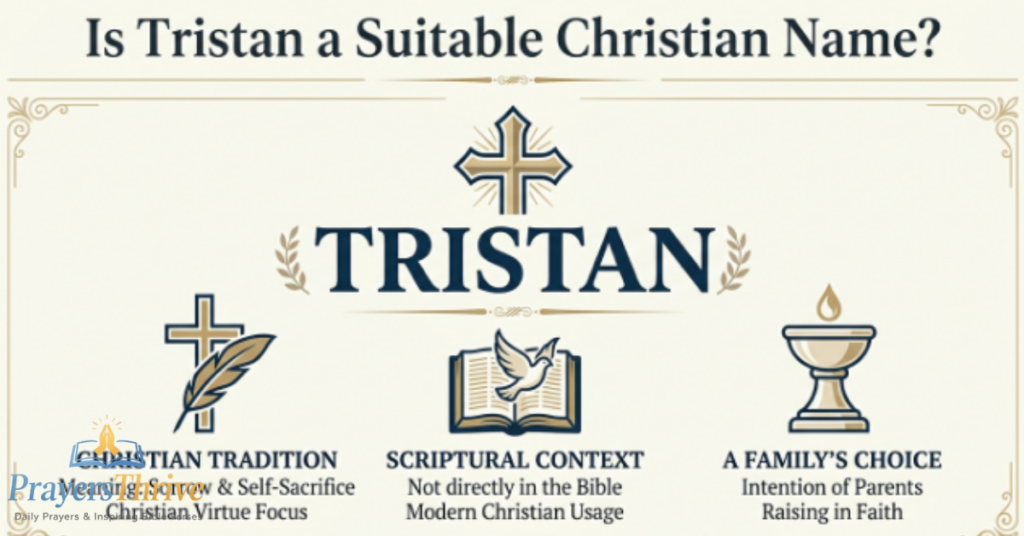
Yes, Tristan works beautifully as a Christian name, even though it does not originate from Scripture. Its symbolic meaning lines up naturally with core Christian values.
- The name reflects growth that comes through hardship.
- It carries themes of transformation rather than permanent sorrow.
- Christian families have safely used the name for generations.
- Its meaning mirrors the gospel pattern of sorrow turning to hope.
- Parents can pray intentionally over the name’s deeper symbolism.
- A name does not require direct biblical mention to be meaningful.
- Tristan encourages a child to view struggle as part of growth.
- The name’s dual origin adds both depth and quiet resilience.
- Many Christian naming choices are based on meaning, not scriptural text.
- Overall, Tristan is a spiritually rich and appropriate choice.
Comparing the Legend of Tristan with Christian Symbolism
| Aspect | Legendary Meaning | Christian Reinterpretation |
| Core Emotion | Tragic love and sorrow | Sorrow transformed into hope |
| Outcome | Doomed romance | Redemption and restoration |
| Symbol | Heartbreak | Resilience and faith |
| Legacy | A tragic hero | A testimony of growth |
The Legendary Meaning
In the medieval story, Tristan represents heartbreak, forbidden love, and an ultimately tragic ending.
- The tale focuses heavily on loyalty despite impossible circumstances.
- Tragedy defines the emotional tone of the entire legend.
- The story remains a secular literary classic, not a faith text.
- Its themes influenced how the name was perceived for centuries.
- Sorrow in the legend has no redemptive resolution.
The Christian Reinterpretation
Faith communities have taken the same emotional roots and pointed them toward hope instead of tragedy.
- Sorrow is reframed as a doorway rather than a dead end.
- Trials are viewed as preparation instead of punishment.
- Pain is understood as purposeful rather than random.
- Restoration replaces tragedy as the expected outcome.
- This reinterpretation gives the name lasting spiritual value.
Spiritual Signs and Interpretations of the Name Tristan

Some people encounter the name Tristan through prayer, dreams, or unexpected personal reflection. Here is how that experience can be understood spiritually.
When the Name Brings Peace
A peaceful encounter with the name often signals encouragement rather than warning.
- Peace may indicate a season of healing is approaching.
- It can suggest God is restoring something once broken.
- A calm response often points toward upcoming stability.
- Peaceful signs rarely require urgent action.
- This experience typically confirms rather than challenges current faith.
When the Name Feels Heavy
A heavier emotional response may point toward unresolved grief that needs attention.
- Heaviness can be an invitation to bring hidden pain to God.
- It may suggest a need for deeper, more honest prayer.
- Old grief sometimes needs release before new growth can begin.
- This response should be met with reflection, not fear.
- Spiritual experiences are best processed through prayer and trusted counsel.
How to Respond to These Signs in Prayer
Whether the encounter feels peaceful or heavy, a thoughtful response in prayer can help clarify its meaning.
- Journaling the experience often reveals patterns over time.
- Bringing the moment directly to God removes unnecessary confusion.
- Trusted mentors or pastors can offer helpful outside perspective.
- Patience matters more than rushing toward an immediate answer.
- Peace, not fear, should guide any spiritual interpretation.
How to Pray Over the Meaning of the Name Tristan

Many parents and believers choose to pray specifically over a name’s meaning, asking God to shape its significance in a person’s life.
- Ask God to turn any sorrowful roots into lasting strength.
- Pray for endurance to be paired with genuine joy.
- Request that compassion grows naturally out of personal experience.
- Invite God to redefine old, heavy meanings with fresh purpose.
- Pray that trials faced would build unshakeable trust.
- Ask for restoration in any area still carrying old pain.
- Pray specifically using verses like Psalm 30:5 as a guide.
- Invite ongoing renewal, not just a one-time spiritual shift.
- Pray for courage that remains steady during hard seasons.
- Close with gratitude for the depth the name already represents.
Sometimes the weight behind a name like Tristan calls for more than reflection — it calls for urgent, heartfelt prayer. If sorrow feels heavier than usual, or if you are believing God for a breakthrough in this season, a miracle prayer that works immediately can be a powerful way to bring your burden directly before God and invite His swift intervention. Many believers turn to focused, faith-filled prayers exactly like this during moments when patience feels tested and hope needs a fresh spark.
Common Misconceptions About the Name Tristan
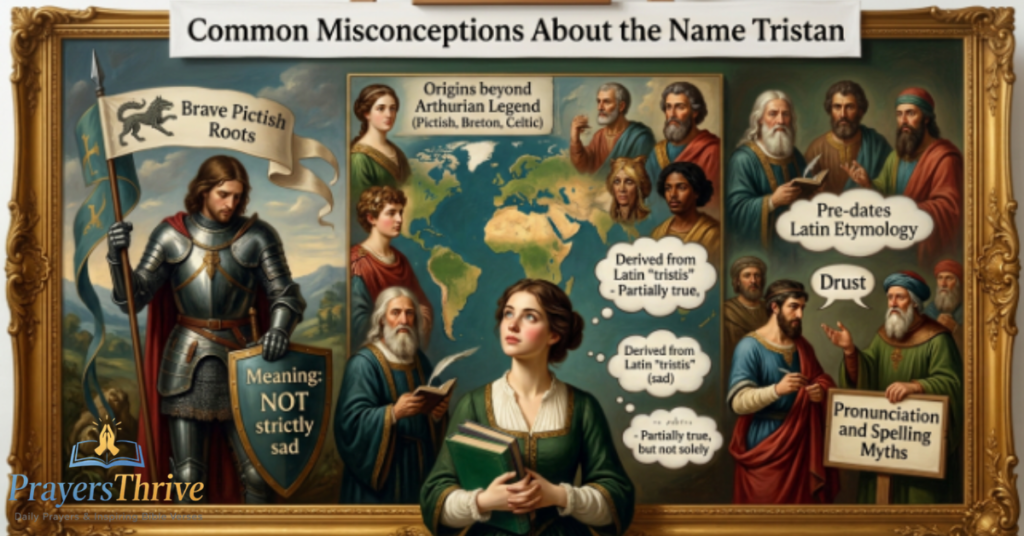
Several misunderstandings tend to follow this name, and clearing them up helps believers approach it with confidence.
- Misconception: Tristan is a biblical name; in reality, it is not found in Scripture.
- Misconception: the name only means sadness; its full meaning is far more layered.
- Misconception: the legend defines the name permanently; faith offers a different lens.
- Misconception: non-biblical names lack spiritual value; many carry deep symbolic meaning.
- Misconception: sorrowful roots make a name unsuitable for children; many strong names begin this way.
- Misconception: Hebrew origin is required for spiritual significance; symbolism can transcend language.
- Misconception: the name guarantees a difficult life; meaning is symbolic, not predictive.
- Misconception: only ancient names carry weight; modern reinterpretation adds new depth.
- Misconception: emotional names are less masculine or strong; depth and strength often coexist.
- Misconception: a name’s history cannot be redeemed; Tristan is a clear example that it can.
Tristan Compared to Other Biblically Meaningful Names
| Name | Meaning | Biblical Connection |
| Tristan | Sorrowful, bold | Symbolic, not scriptural |
| Job | Persecuted | Central Old Testament figure |
| Jabez | Pain | Old Testament prayer of blessing |
| Naomi/Mara | Pleasant/Bitter | Book of Ruth |
| Hannah | Grace, favor | Mother of Samuel |
- Job’s name reflects suffering, yet his story ends in restoration.
- Jabez prayed his way past the pain implied in his own name.
- Naomi renamed herself Mara during grief, then returned to joy.
- Hannah’s name carries hope, mirroring the redemptive arc of Tristan.
- Each comparison shows how difficult meanings can lead to powerful testimonies.
Why These Comparisons Matter
Placing Tristan alongside biblical names with difficult meanings helps highlight a consistent pattern found throughout Scripture and Christian tradition alike.
- Difficult meanings rarely determine a person’s final outcome.
- Scripture repeatedly shows names being redefined through faith and obedience.
- This pattern offers reassurance to anyone hesitant about a sorrowful-sounding name.
- Comparing Tristan to biblical figures grounds its symbolism in familiar stories.
- The consistent theme across every example is redemption, not defeat.
Practical Faith Lessons from the Meaning of Tristan

- God remains present during every season of sorrow.
- No trial experienced in faith is ultimately wasted.
- Strength is almost always developed through difficulty.
- Compassion for others frequently grows out of personal struggle.
- Hope reliably follows even the longest seasons of hardship.
- Trusting God’s timing matters more than trusting quick outcomes.
- Honest prayer, like David’s psalms, deepens personal faith.
- Restoration is a consistent promise throughout Scripture.
- Emotional depth is a strength, not a weakness, in faith.
- Every difficult chapter can still serve a future purpose.
Journaling Reflection Questions for the Name Tristan

For anyone wanting to personally connect with the meaning behind this name, these reflection questions can guide quiet time or prayer.
- What season of sorrow in my life eventually led to growth.
- Where do I currently need God’s nearness the most.
- How has past pain shaped my capacity for compassion.
- What trial am I facing that could be building deeper trust.
- Where in my story is restoration still in progress.
- What would it look like to trade grief for gratitude today.
- How can I encourage someone else walking through hardship.
- What verse from this article speaks most directly to my life.
- How has my understanding of strength changed through difficulty.
- What prayer do I want to speak over this season right now.
see also: 190 Powerful Pornography Prayer Points with Scriptures for Freedom, Healing & Deliverance
Tristan in Global Christian Naming Traditions

The way believers relate to the name Tristan often shifts depending on cultural background, language, and regional naming customs. Looking at this global picture adds further depth to the tristan name meaning bible discussion.
Western Christian Communities
In North America and Western Europe, Tristan is widely recognized and has grown steadily in popularity among Christian families over the past few decades.
- Many Western churches embrace names based on meaning rather than direct scriptural mention.
- Parents in these regions often research name symbolism before a child is born.
- Christian baby-naming resources frequently list Tristan alongside other meaningful, non-biblical names.
- The name’s medieval European roots make it feel familiar within Western Christian culture.
- Church communities in these regions rarely question the name’s suitability for baptism or dedication.
Non-Western Adoption of the Name
Outside its traditional European roots, Tristan has also found a place among Christian families in other parts of the world who are drawn to its meaning rather than its history.
- Some families choose the name specifically because of its sorrow-to-strength symbolism.
- Missionary and immigrant communities sometimes select Western names alongside traditional ones.
- Cross-cultural naming often blends meaning from multiple traditions into a single choice.
- The universal themes of suffering and redemption translate easily across cultures.
- This global adoption shows how spiritual meaning can transcend a name’s original geography.
Signs That God May Be Redefining This Season Through the Name Tristan
For some believers, encountering the meaning of Tristan arrives at a very specific moment, often during a season of transition, grief, or spiritual searching. Recognizing these signs can help clarify what God may be doing.
- A sudden interest in the name during a difficult personal season.
- Repeated exposure to the name through conversations, media, or Scripture study.
- A growing sense of peace after learning the name’s deeper spiritual meaning.
- Renewed motivation to pray honestly about long-held grief or disappointment.
- A desire to reframe a painful chapter of life as part of a larger purpose.
- Increased compassion toward others going through similar struggles.
- A quiet confidence that current hardship is not permanent.
- New clarity about a calling that seemed unclear before this season.
- A pull toward verses like Psalm 30:5 or Romans 8:28 during prayer time.
- An overall sense that sorrow is being slowly replaced with hope.
If several of these signs feel familiar, it may be worth spending unhurried time in prayer, journaling, and Scripture to fully understand what this season is producing.
How the Meaning of Tristan Applies Beyond Naming a Child

While much of this discussion centers on parents choosing a name, the deeper meaning behind Tristan also speaks to anyone who carries this name personally or feels drawn to its symbolism for other reasons.
For Adults Who Carry the Name Tristan
Adults who share this name often find personal meaning in understanding its full spiritual background, especially during difficult seasons of life.
- Learning the name’s history can offer a fresh sense of identity.
- Many adults feel encouraged discovering the sorrow-to-strength symbolism applies to their own story.
- Understanding a name’s deeper meaning can shape how someone views personal setbacks.
- Some choose to adopt Bible verses connected to their name as personal life verses.
- This kind of reflection often strengthens a person’s overall sense of purpose.
For Those Choosing a Confirmation or Spiritual Name
Some Christian traditions allow believers to choose an additional spiritual or confirmation name later in life, and Tristan is sometimes selected for this purpose.
- The name’s redemptive symbolism fits well within confirmation traditions.
- Choosing a name later in life often carries intentional spiritual meaning.
- Tristan can represent a personal testimony of moving from struggle to faith.
- This kind of naming decision is usually made after prayer and reflection.
- The name’s dual origin offers both emotional depth and spiritual strength for this purpose.
For Writers, Teachers, and Content Creators
Beyond personal naming decisions, the meaning of Tristan is often referenced by writers, teachers, and content creators exploring themes of faith and identity.
- The name provides a useful case study on redeeming difficult meanings through faith.
- Teachers use it to illustrate how Scripture speaks to non-biblical names.
- Writers often reference Tristan when discussing the broader theme of suffering and hope.
- Content exploring name meanings frequently uses Tristan as an example of spiritual reinterpretation.
- This ongoing interest keeps the name’s spiritual meaning relevant across generations.
Key Takeaways at a Glance
For readers who want a fast summary before moving into the FAQs, this section condenses the entire discussion into its most essential points.
- Tristan does not appear anywhere in the Bible by name or reference.
- Its Latin root, tristis, means sorrowful, while its Celtic root suggests boldness.
- The medieval legend of Tristan and Isolde shaped its tragic cultural reputation.
- Christian believers have reinterpreted the name around themes of redemption.
- Seven core Bible verses reflect the emotional journey connected to the name.
- Additional verses, including Matthew 5:4, deepen the theme of comfort in mourning.
- Five spiritual themes trace a path from sorrow all the way to gratitude.
- Hebrew spirituality treats sorrow as sacred rather than shameful, aligning with Tristan’s meaning.
- The name is widely considered a strong, appropriate choice for Christian families.
- Ultimately, Tristan’s story mirrors the gospel pattern of pain transformed into purpose.
This summary is meant to reinforce, not replace, the deeper reflection found throughout the rest of this guide.
Conclusion
The tristan name meaning bible search may not lead to a verse or character in Scripture.
Yet its message still echoes throughout God’s Word in a powerful way. Sorrow, in this name’s story, is never presented as the final word. It becomes the starting point for something far greater instead.
From Job to David to Paul, biblical figures repeatedly show that pain can be reshaped into purpose. If the name Tristan has touched your life or your family, let it serve as a quiet reminder. Every trial carries meaning, even when that meaning is not immediately visible. God sees every tear and remains near through every difficult season. Every season of struggle can still lead toward a morning of lasting joy.
FAQs
Is Tristan a biblical name?
No, Tristan does not appear in Scripture, though its meaning connects closely to biblical themes of sorrow, endurance, and redemption.
What is the spiritual meaning of Tristan in Christianity?
Spiritually, Tristan represents a journey from sorrow to strength, reflecting emotional depth, compassion, and faith that grows through hardship.
Is Tristan mentioned anywhere in Scripture?
There is no person, place, or reference to Tristan anywhere in the Old or New Testament.
Is Tristan a good Christian name for a baby boy?
Yes, many Christian families choose Tristan because its symbolic meaning aligns with values like perseverance, faith, and redemption.
What Bible verse best reflects the meaning of Tristan?
Psalm 30:5 captures the name’s emotional arc well, promising that weeping gives way to joy in the morning.
What does dreaming about the name Tristan symbolize?
It often points toward a season of healing, emotional release, or an invitation to bring hidden pain honestly before God.
These questions cover the most common concerns raised by parents, believers, and curious readers alike, but personal reflection through prayer will always add a layer of meaning that a general guide cannot fully capture.

I’m Aria, an AI content writing expert with 3 years of experience, creating engaging and inspiring faith-based content for readers seeking prayers, blessings, and Bible insights.